컨텐츠 내용을 수정할 수 있습니다
Rather than memorizing fall risk scores or restraint schedules, focus on identifying what has changed right now, reducing the underlying causes, and creating a personalized prevention plan together with the patient. Then, apply and reassess starting with the least restrictive method.
Core Judgment: Identify acute deterioration → Immediately remove environmental hazards → Pinpoint individual risk factors → Create a prevention plan with the patient and family → Provide purposeful observation → Reassess the reasons for any failure → Use restraints only as a last resort, with the least restriction, for the shortest time.
In the local study materials, topics on mobility, older adults, restraints, falls, and incident reports appeared repeatedly. Instead of simply transferring fixed numbers of bed rails or universal restraint times, I've corrected this content to reflect the current principles of AHRQ, CMS, and The Joint Commission.
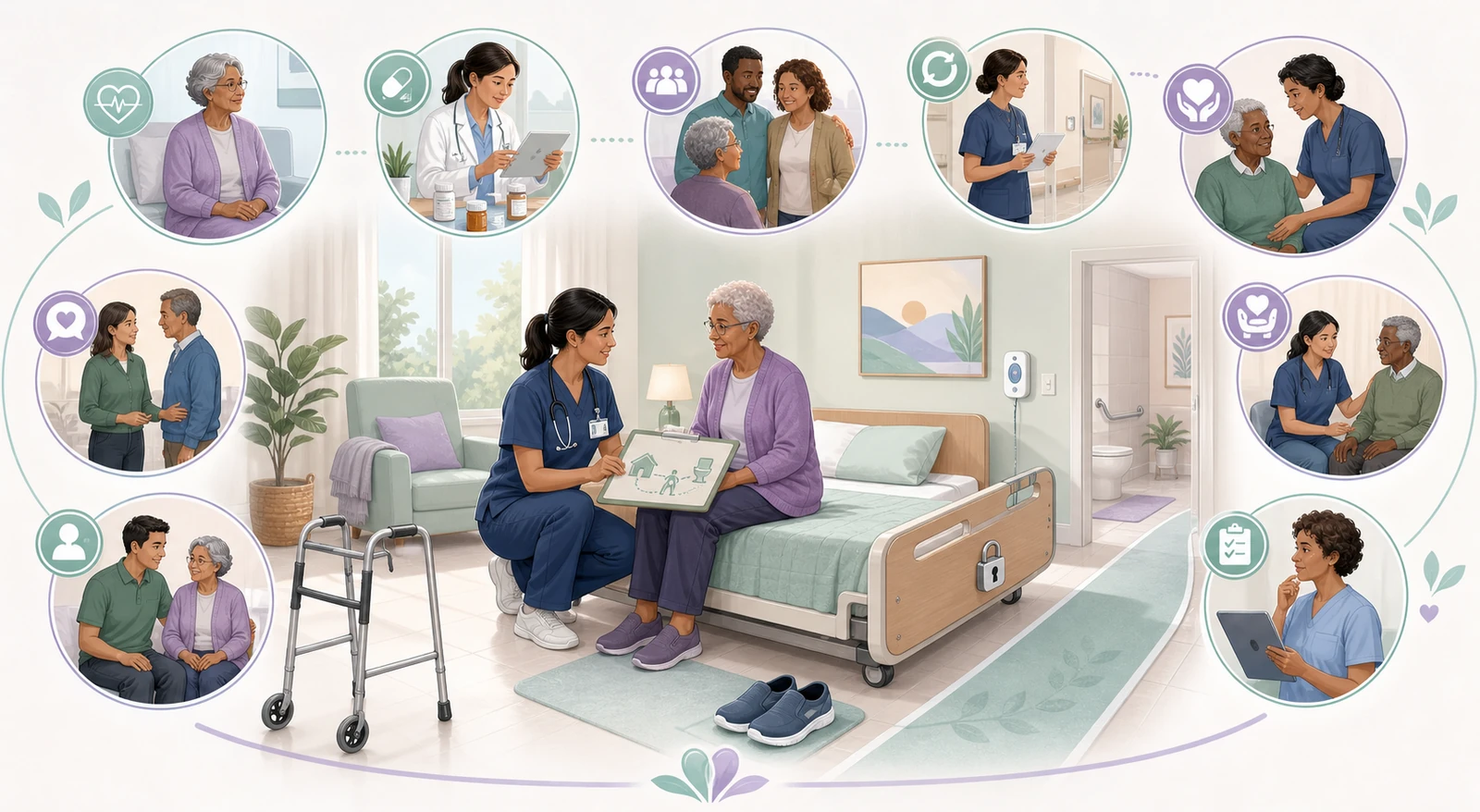
Look for causes that need immediate treatment first, such as dizziness, hypotension, hypoxia, hypoglycemia, bleeding, delirium, sedation, or unilateral weakness.
Lower the bed, lock the wheels, clear the walking path, and keep the call light and any needed assistive devices within easy reach.
Choose interventions tailored to the patient's needs: toileting, pain, footwear, glasses/hearing aids, medications, IV lines, mobility level, and cognitive status.
Re-evaluate the risk and the plan after any surgery, sedation, new medication, room transfer, a fall, or a change in an acute condition.
| Standard for all patients | Added based on individual risk |
|---|---|
| Accessible call light, adequate lighting, clear pathways, low and locked bed, non-slip surfaces, and guidance on asking for help before moving | Scheduled toileting assistance, gait belt/lift, a sitter, bed/chair alarms, medication review, PT/OT evaluation |
| Explain the fall risk and how to call for help to the patient in a way they can understand | Delirium prevention, staged mobility for orthostatic hypotension, nighttime routines, family involvement, cognitive aids |
Assess opioids, sedatives, hypnotics, and antipsychotics for drowsiness, decreased attention, and balance changes in the context of the patient's current status.
Diuretics, antihypertensives, dehydration, bleeding, and orthostatic hypotension can cause dizziness and weakness when standing up.
Frequency, diuretics, nocturia, and diarrhea can make a patient rush to move alone. Create a proactive toileting plan.
Check glasses, hearing aids, foot sensation, muscle strength, proper fit of mobility aids, and any new unilateral weakness.
Keep the patient's body close to your own, create a wide base of support, protect their head, and bend your knees to guide them slowly to the floor. Do not try to lift them up with your own strength; call for help and appropriate equipment.
| Medical record | Safety incident reporting system |
|---|---|
| Time, location, and position when found; patient's statement; objective assessment; vital signs and neurological status; pain and injuries; notifications and interventions; reassessment | Internal institutional process for analyzing causes such as environment, equipment, and workflow, and for preventing recurrence |
| Record the patient's condition and nursing care without assumptions or blame | It's generally not recommended to document the fact that an incident report was filed in the medical record, but follow your facility's policy |
Don't skip the report just because the patient wasn't injured, and don't choose to omit documenting their pre-incident status and post-fall monitoring.
| Observed behavior | Potential cause to look for first | Less restrictive interventions |
|---|---|---|
| Repeatedly pulling at lines | Pain, urge to urinate, hypoxia, delirium, positional discomfort, lack of understanding | Treat the cause, camouflage or reposition the device, provide explanation, involve family or a sitter, re-evaluate the necessity of the line |
| Continuously trying to get out of bed | Need for bathroom, thirst, pain, unfamiliar environment | Purposeful rounding, scheduled toileting, close observation, low bed position, accompany when moving |
| Agitation or threatening behavior | Hypoxia, hypoglycemia, withdrawal, head injury, overstimulation, fear | Evaluate for medical causes, reduce stimulation, have one calm person talk to them, ensure distance and an exit path, call for support |
A patient voluntarily using some side rails to assist with mobility is different in purpose and effect from raising all side rails to prevent them from getting out of bed. Assess the patient's mobility, confusion level, bed height, and the risk of an escape attempt together.
Move anyone directly exposed to smoke, fire, or hazardous materials to a safe area first.
Activate the facility's alarm system, close doors to limit the spread, and control oxygen and electrical hazards according to institutional procedures.
Use appropriate fire-extinguishing equipment only if you are trained and have a secured escape route, and follow evacuation orders.
First: Safely sit or lie the patient down to prevent a fall. The RN must directly assess their level of consciousness, breathing, oxygenation, blood pressure, and degree of sedation. Then, decide whether to hold the medication, initiate an emergency response, or report, based on the prescription and the patient's condition.
Choices to avoid: Sending the patient to the bathroom alone without an assessment, delegating the clinical judgment to a UAP, or leaving the patient standing while you call the doctor.
First: Assess for reversible causes like hypoxia, hypoglycemia, pain, urge to urinate, infection, or medication effects. Re-evaluate the necessity of the catheter, and try repositioning or camouflaging the tube, providing an explanation, offering toileting alternatives, and involving family or a sitter with close, purposeful rounding.
Considering restraints: Only apply the minimal level necessary if alternatives have failed and removing the device would create an immediate, serious harm. Continuously look for the opportunity to discontinue.
First: Tell the patient not to move, and check their responsiveness, ABCs, bleeding, deformities, head injury, and pain. After providing any needed emergency care and notifying the healthcare team, proceed with moving and diagnostic tests as ordered, and continue repeated neurological observations.
Afterward: Document the patient’s statements and objective findings, report the safety incident, and redesign the care plan addressing toileting schedule, call light access, medications, environment, sensory support, and gait assistance.
다음 이론을 계속 학습하려면 로그인하세요.
로그인하고 계속 학습필기노트, 하이라이터, 메모는 잘 쓰고 있어?
내보내줘운영진이 검토할게요!
마이페이지에서 차단한 회원을 관리할 수 있어요.