A nurse is caring for a patient who had an inferior vena cav… | 마이메르시 MyMerci
마이메르시 — 문제와 상세 해설까지 전부 무료 무료로 시작하기
Adult Health
문제

A nurse is caring for a patient who had an inferior vena cava filter insertion. What is the most critical assessment finding that requires immediate reporting after IVC filter insertion?

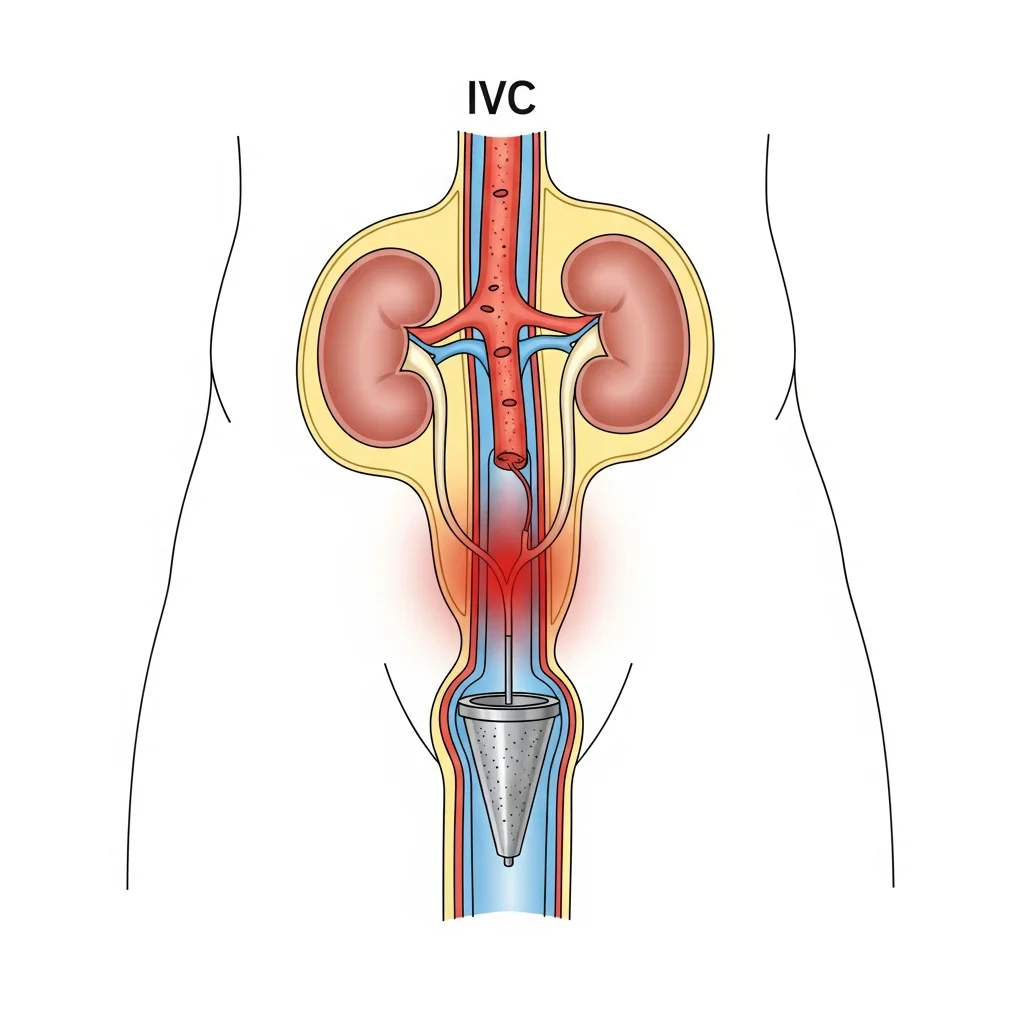
문제 이미지

해설
Sudden severe back pain with hypotension suggests IVC filter migration or perforation, a life-threatening emergency requiring immediate intervention. Mild bruising, anxiety, and low-grade fever are common or less urgent findings.
같은 주제 다음 문제A nurse is assessing a patient who had an inferior vena cava (IVC) filter placement. Which…

심화 해설

Correct Answer: 1. Sudden onset of severe back pain with hypotension

The most critical post-procedural complication following inferior vena cava (IVC) filter insertion is retroperitoneal hemorrhage, which manifests as the sudden onset of severe back pain accompanied by hypotension. This presentation indicates active, life-threatening bleeding into the retroperitoneal space, requiring immediate intervention.

Understanding the Clinical Priority
The IVC is a large retroperitoneal structure. During percutaneous insertion, the access needle or introducer sheath can inadvertently perforate the venous wall. Because the IVC is located in the retroperitoneum, bleeding from a perforation is not immediately visible externally. Instead, blood accumulates in the retroperitoneal space, which can hold a large volume of blood. The combination of severe back pain (from tissue distension and nerve compression) and hypotension (indicating significant volume loss and hemodynamic instability) is the classic clinical picture of this emergency. This directly aligns with the high-risk nature of IVC procedures, where vascular injury is a known, albeit uncommon, complication. The provided literature on IVC filter retrieval techniques [1] underscores that even with advanced retrieval methods, procedural complications involving the caval wall are a significant concern, reinforcing the need for vigilant post-procedure assessment for signs of hemorrhage.

Analysis of Incorrect Options

Option 2: Mild bruising at the insertion site
A small amount of ecchymosis or a small hematoma at the puncture site (typically in the neck or groin) is an expected finding after any percutaneous vascular procedure. It results from minor capillary disruption during needle entry and does not signify a deep, life-threatening bleed. This is a localized and self-limiting issue, not a systemic emergency.

Option 3: Patient reports feeling anxious about the procedure
Anxiety is a common and understandable psychosocial response to an invasive procedure. While the nurse should address the patient's concerns with therapeutic communication and education, this is a psychosocial need, not a physiological emergency. It does not take priority over a finding that suggests active hemorrhage and hemodynamic compromise.

Option 4: Temperature of 99.2°F (37.3°C) 24 hours post-procedure
A low-grade temperature elevation within the first 24 hours after a procedure can be a non-infectious, inflammatory response to tissue trauma. While it requires continued monitoring, a temperature of 99.2°F (37.3°C) is not a critical value that signals an immediate emergency. The priority is to first rule out life-threatening hemorrhagic shock, as indicated by the correct answer. The implementation of tracking systems, as discussed in the literature [2], aims to improve long-term follow-up and retrieval rates, highlighting that the immediate post-procedural period is focused on acute complications like bleeding, while issues like infection are a later concern.

임상 시나리오

IVC Filter Post-Procedure EmergencyRecognizing Retroperitoneal Hemorrhage

The most critical post-procedural complication is retroperitoneal hemorrhage from caval wall perforation. It presents with the classic triad of sudden severe back pain, hypotension, and tachycardia.

Bleeding into the retroperitoneal space is not visible externally. The space can hold over 3 liters of blood, rapidly leading to hemorrhagic shock. Immediate reporting and intervention are required.

Caution

Do not dismiss severe back pain as musculoskeletal. In the context of recent IVC filter insertion, it is a vascular emergency until proven otherwise. Assess vital signs immediately and notify the provider.

핵심 개념

Merci NCLEX-RN Question Bank 3,445 문제 · 로그인 없이 바로 볼 수 있어요

마이메르시로 국가고시 완벽 대비

기출문제와 상세 해설을 무료로. 내 약점을 분석하고 진도를 관리하며 더 똑똑하게 공부하세요.

무료로 시작하기

학습 참고용입니다. 실제 임상은 최신 지침과 소속 기관 프로토콜을 따르세요.