Key Nursing Concept
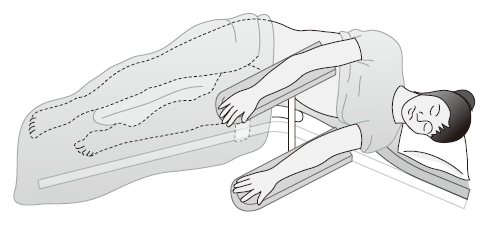
This item asks about the indications for the
lateral position among surgical positions. The position shown in the picture is one in which the client lies on the side, and it is used mainly for
surgeries requiring access to the thorax or the flank (lateral aspect).
Rationale for the correct answer (lung surgery): The
lungs are located on the right and left sides within the thoracic cavity. For lung procedures such as a lobectomy or wedge resection, the client is placed in the lateral position with the operative side up, depending on the surgical site. This provides the surgeon with optimal access to the lung through the lateral chest wall.
Why the other options are incorrect:
- Cardiac surgery: Most cardiac procedures are performed through a median sternotomy, so the client is placed in the Commonly confused! supine position.
- Abdominal surgery: Most abdominal procedures (stomach, bowel, liver, gallbladder, etc.) are approached through the anterior abdomen, so the supine position is used.
- Rectal surgery: For rectal and anal procedures, the lithotomy position or the prone position is more common.
- Spinal surgery: Posterior spinal approaches use the prone position, while anterior approaches generally use the supine position.
High-Yield Exam Point
Surgical positioning is critical for both surgical access and client safety. Memorize the major positions paired with their indications.
| Surgical position | Common indications | Features/precautions |
|---|
| Supine | Abdominal, cardiac, thyroid, breast, extremity surgery | The most commonly used position |
| Lateral | Lung and kidney surgery | Watch for nerve/vessel compression of the dependent arm and leg |
| Prone | Posterior spine, occipital, and buttock surgery | Respiration, facial pressure, and eye protection are essential |
| Lithotomy | Rectal, anal, gynecologic, and urologic surgery | Watch for impaired lower-extremity circulation and nerve injury |
| Trendelenburg | Lower abdominal and pelvic surgery | May limit respiratory function and cause headache |