컨텐츠 내용을 수정할 수 있습니다
| Stage | Tissue Involvement | Appearance | Key Characteristics |
|---|---|---|---|
| Stage 1 Intact skin, non-blanchable erythema (epidermis and possibly dermis affected, but no skin loss) | Non-blanchable redness | Intact skin, may feel warm/firm | |
| Stage 2 | Partial-thickness (epidermis/dermis) | Shallow open ulcer or blister | Pink-red wound bed, no slough |
| Stage 3 | Full-thickness | Crater-like wound | Subcutaneous fat visible, no bone/muscle exposed |
| Stage 4 | Full-thickness with extensive damage | Deep crater with exposed structures | Bone, tendon, or muscle visible |
| Unstageable | Unknown depth | Covered with slough/eschar | Cannot determine depth until debridement |
| Deep Tissue Injury | Damage to deep tissues | Purple/maroon intact skin or blister | May rapidly deteriorate despite treatment |
Remember the six Braden Scale components with:
Lower scores indicate higher risk (total score range: 6-23)
Never massage reddened areas or bony prominences as this can cause deep tissue damage. Avoid positioning directly on the trochanter when using side-lying positions, and ensure heels are completely off the surface (floating) for high-risk patients.
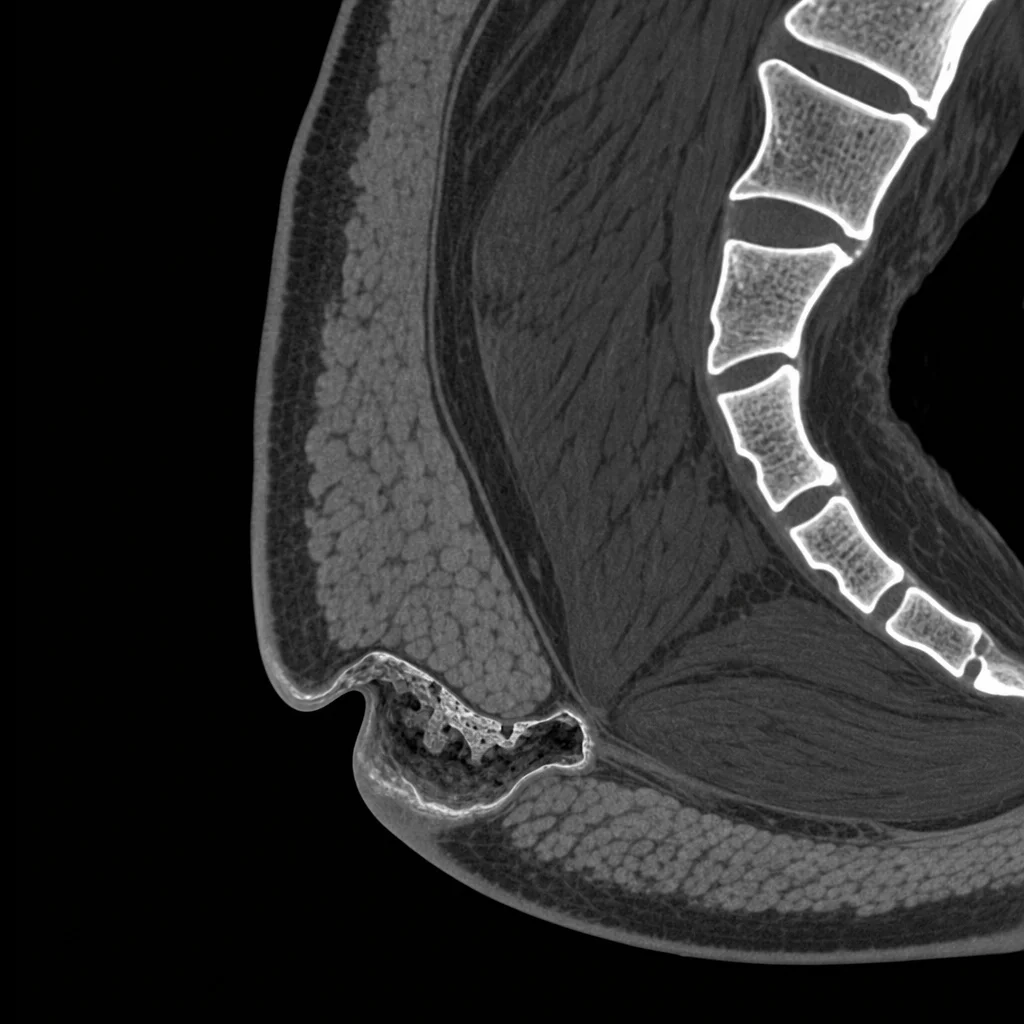
A 78-year-old patient with limited mobility presents with a pressure injury on the sacrum. Upon assessment, you note a 4cm x 3cm x 0.5cm wound with 75% red granulation tissue and 25% yellow slough. The wound edges are attached, periwound skin is intact but slightly macerated. Moderate amount of serosanguineous drainage is present. Patient reports pain level of 3/10 during dressing changes.
Question: What stage would you classify this pressure injury?
Answer: This would be classified as a Stage 3 pressure injury based on the full-thickness tissue loss with visible subcutaneous fat (evidenced by depth and slough) without exposed bone, tendon, or muscle.
| Dressing Type | Indications | Advantages | Considerations |
|---|---|---|---|
| Transparent Film | Stage 1, shallow Stage 2, protection | Allows visualization, barrier to bacteria | Not for exudating wounds, may damage fragile skin |
| Hydrocolloid | Stage 2-3, minimal exudate | Autolytic debridement, waterproof | Not for infected wounds, may leave residue |
| Foam | Stage 2-4, moderate to heavy exudate | Highly absorbent, non-adherent | Requires secondary dressing if non-adhesive |
| Alginate | Stage 3-4, heavy exudate, tunneling | Highly absorbent, hemostatic properties | Requires moist wound bed, secondary dressing |
| Hydrogel | Stage 2-4, dry wounds, necrotic tissue | Hydrates wound bed, aids debridement | Not for heavily exudating wounds |
| Negative Pressure Wound Therapy | Stage 3-4, complex wounds | Reduces edema, promotes granulation | Contraindicated with malignancy, exposed vessels |
Never place occlusive dressings over infected wounds as this can lead to abscess formation and systemic infection. Always assess for signs of infection before each dressing change and notify the provider if infection is suspected.
| Characteristic | Pressure Injury | Incontinence-Associated Dermatitis | Venous Ulcer | Arterial Ulcer |
|---|---|---|---|---|
| Location | Bony prominences (sacrum, heels, ischium) | Perineum, buttocks, inner thighs | Medial lower leg, above ankle | Toes, feet, lateral ankle |
| Appearance | Circular/regular shape, varies by stage | Diffuse erythema, denudation | Irregular, shallow, ruddy base | "Punched out" appearance, pale base |
| Edges | Distinct wound margins | Diffuse, poorly defined | Irregular, sloping edges | Well-defined, steep edges |
| Pain | Variable, may be painless with neuropathy | Burning, itching, tingling | Aching, relieved with elevation | Severe, worse with elevation |
| Cause | Pressure, shear, friction | Moisture, chemical irritation | Venous hypertension | Arterial insufficiency |
Avoid these common errors in pressure injury management:
When answering NCLEX questions about multiple patients, remember this priority order:
Match the descriptions to the correct pressure injury stage:
다음 이론을 계속 학습하려면 로그인하세요.
로그인하고 계속 학습필기노트, 하이라이터, 메모는 잘 쓰고 있어?
내보내줘운영진이 검토할게요!
마이페이지에서 차단한 회원을 관리할 수 있어요.