성장을 멈추지 마세요

체험은 만족하셨나요?

현재 45,766명이 마이메르시로 공부 중이에요

지식 자료를 소장하고 멋진 의료인으로 성장하세요

Stevens-Johnson Syndrome | 마이메르시 MyMerci
제안하기

뭔가 하고 싶은 말이 있는거야?

0 / 2000

Stevens-Johnson Syndrome

NCLEX Review Guide: Stevens-Johnson Syndrome

Pathophysiology & Clinical Presentation

Definition & Mechanism

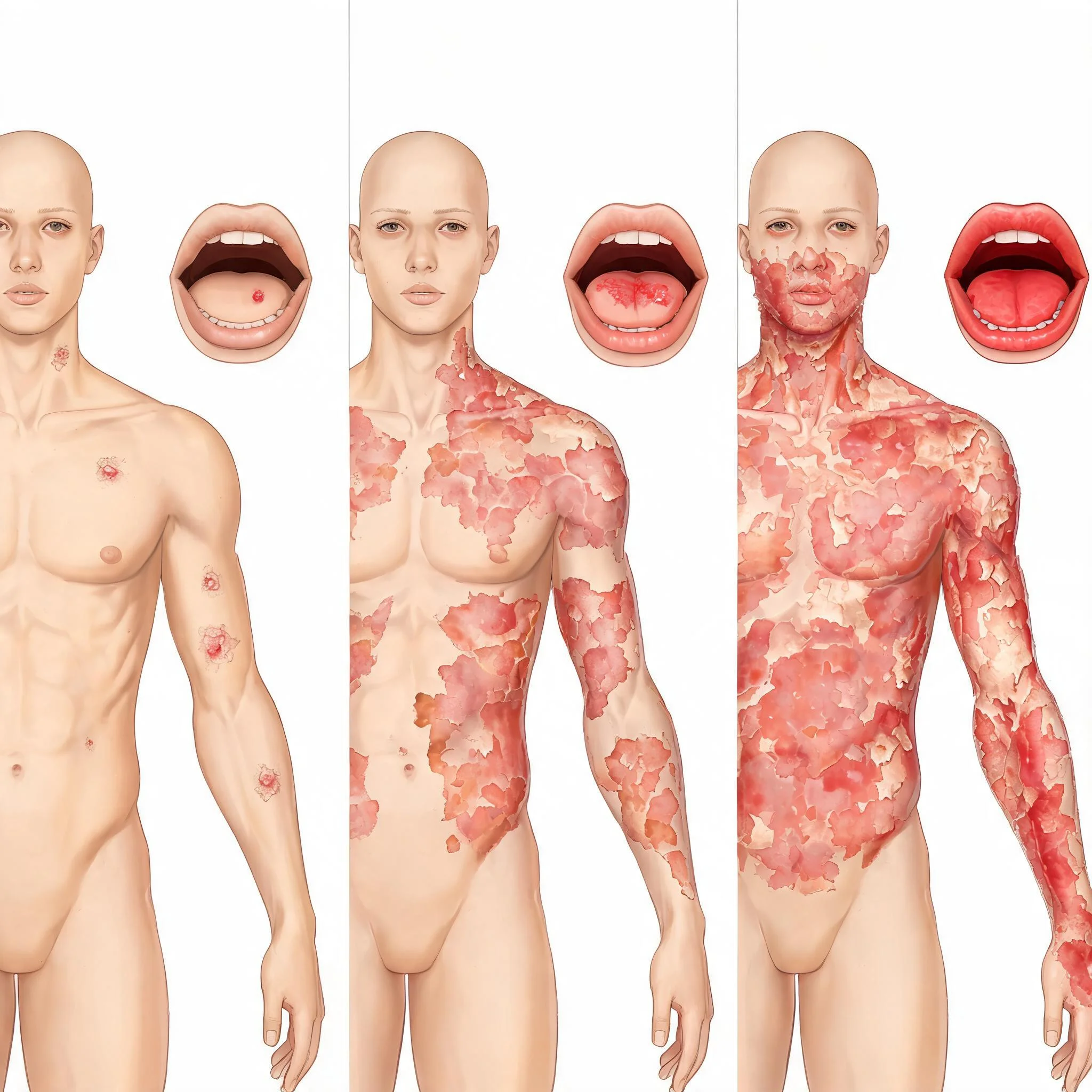
  • Stevens-Johnson Syndrome (SJS) is a severe, life-threatening hypersensitivity reaction affecting skin and mucous membranes with <10% body surface area involvement.
  • Represents a type IV delayed hypersensitivity reaction causing widespread epidermal necrosis and detachment from the dermis.

Clinical Manifestations

  • Prodromal phase: Fever, malaise, headache, and upper respiratory symptoms lasting 1-3 days before skin eruption.
  • Target lesions: Characteristic "bull's-eye" appearance with central necrosis, intermediate pale zone, and erythematous outer ring.
  • Mucous membrane involvement affects eyes, mouth, genitalia, and respiratory tract causing painful erosions and bleeding.
  • Skin detachment occurs in sheets, creating large denuded areas resembling severe burns.

Key Points

  • SJS affects <10% BSA; TEN (Toxic Epidermal Necrolysis) affects >30% BSA
  • Mucous membrane involvement is hallmark feature distinguishing from other conditions
  • Nikolsky's sign positive (skin slips off with gentle pressure)

Etiology & Risk Factors

Common Triggers

  • Medications: Sulfonamides, anticonvulsants (phenytoin, carbamazepine), allopurinol, NSAIDs, and antibiotics are primary culprits.
  • Infections: Mycoplasma pneumoniae, herpes simplex virus, and other viral infections can trigger SJS.
  • Malignancies and autoimmune disorders may predispose patients to developing SJS.

Memory Aid: SULFA

Sulfonamides
Uricostatics (allopurinol)
Lamotrigine
Fenytoins
Antibiotics (penicillins, quinolones)

Nursing Assessment & Interventions

Priority Assessments

  1. Airway assessment: Monitor for laryngeal edema and respiratory compromise due to mucous membrane involvement.
  2. Fluid and electrolyte status: Large fluid losses occur through denuded skin areas similar to burn patients.
  3. Pain assessment: Severe pain from exposed nerve endings requires aggressive pain management.
  4. Infection monitoring: Compromised skin barrier increases sepsis risk significantly.

Nursing Interventions

  • Discontinue offending agent immediately and avoid cross-reactive medications to prevent progression.
  • Provide burn unit care with strict aseptic technique, temperature regulation, and specialized wound dressings.
  • Administer IV fluids carefully to maintain hydration while monitoring for fluid overload in compromised patients.
  • Implement eye care protocols with artificial tears, antibiotic ointments, and ophthalmology consultation to prevent blindness.

Key Points

  • Treat as medical emergency requiring immediate intensive care
  • Supportive care is primary treatment; corticosteroids controversial
  • Mortality rate 5-15% for SJS, higher for TEN

Commonly Confused Concepts

SJS vs. Similar Conditions

Condition BSA Involvement Mucous Membranes Key Distinguisher
Stevens-Johnson Syndrome <10% Always involved Target lesions + mucosal erosions
Toxic Epidermal Necrolysis >30% Always involved Widespread sheet-like detachment
Erythema Multiforme <10% Minimal/absent Target lesions without mucosal involvement
Drug Rash Variable Rarely involved No target lesions or detachment

Clinical Scenario

A 45-year-old patient presents with fever, painful mouth sores, and target-like skin lesions covering 8% of body surface area. History reveals starting trimethoprim-sulfamethoxazole 5 days ago for UTI. Priority action: Discontinue antibiotic immediately and prepare for intensive monitoring.

Study Tips & Memory Aids

STEVENS Memory Aid

Stop the offending drug
Target lesions present
Eyes need protection
Vital signs monitoring
Electrolyte balance
Nikolsky's sign positive
Sepsis prevention priority

Quick Check Questions

  • □ Can you identify the percentage BSA involvement that distinguishes SJS from TEN?
  • □ Do you know the most common medication triggers for SJS?
  • □ Can you describe the priority nursing assessments for SJS patients?
  • □ Do you understand why eye care is critical in SJS management?

Common Pitfalls

  • Don't confuse SJS with simple drug rash - mucous membrane involvement is key
  • Don't delay discontinuing suspected medications - time is critical
  • Don't forget eye care - can prevent permanent vision loss
  • Don't underestimate fluid needs - treat like burn patient

다음 이론을 계속 학습하려면 로그인하세요.

로그인하고 계속 학습
컨텐츠를 그만볼래?

필기노트, 하이라이터, 메모는 잘 쓰고 있어?

내보내줘
어떤 폴더에 저장할래?

컨텐츠 노트에는 총 0개의 폴더가 있어!

폴더 만들기
컨텐츠 만들기
만들기
신고했어요.

운영진이 검토할게요!

해당 유저를 차단했어요.

마이페이지에서 차단한 회원을 관리할 수 있어요.