🚀

오늘의 열정을 계속 이어가세요!

체험은 만족하셨나요? 지식 자료를 소장하고 멋진 의료인으로 성장하세요!

Problems of the Pancreas | 마이메르시 MyMerci
제안하기

Problems of the Pancreas

NCLEX Review Guide: Adult Health - Endocrine Problems of the Pancreas

Diabetes Mellitus Overview

Type 1 vs Type 2 Diabetes

Characteristic Type 1 DM Type 2 DM
Onset Usually <30 years, rapid Usually >40 years, gradual
Pathophysiology Autoimmune beta cell destruction Insulin resistance + beta cell dysfunction
Body Weight Normal or underweight Overweight/obese (80-90%)
Treatment Insulin required Diet, exercise, oral agents, insulin

Key Points

  • Type 1 DM requires lifelong insulin therapy due to complete beta cell destruction
  • Type 2 DM represents 90-95% of all diabetes cases and is strongly linked to obesity

Acute Complications

Diabetic Ketoacidosis (DKA)

  • DKA occurs primarily in Type 1 diabetes when insulin deficiency leads to fat breakdown and ketone production
  • Classic triad: hyperglycemia (>250 mg/dL), ketosis, and metabolic acidosis (pH <7.3)
  • Clinical manifestations include Kussmaul respirations, fruity breath odor, dehydration, and altered mental status

Clinical Scenario

A 19-year-old with Type 1 DM presents with nausea, vomiting, and deep rapid breathing. Blood glucose is 380 mg/dL, pH is 7.2, and urine ketones are positive.

  1. Establish IV access and begin fluid resuscitation with 0.9% normal saline
  2. Start continuous IV insulin infusion (0.1 units/kg/hr)
  3. Monitor electrolytes closely, especially potassium and phosphorus
  4. Add dextrose to IV fluids when glucose drops to 250 mg/dL
Never stop insulin abruptly in DKA - continue until ketones clear and pH normalizes

Hyperosmolar Hyperglycemic State (HHS)

  • HHS occurs primarily in Type 2 diabetes with severe dehydration and extremely high glucose (>600 mg/dL)
  • Unlike DKA, ketosis is minimal or absent because some insulin is still present
  • Mortality rate is higher than DKA due to severe dehydration and advanced age of patients

Memory Aid: DKA vs HHS

DKA = "Ketones and Kids" - Type 1, younger patients, ketones present

HHS = "High and Hyperosmolar" - Type 2, older patients, no ketones
Chronic Complications

Diabetic Nephropathy

  • Leading cause of end-stage renal disease in the United States, affecting 20-40% of diabetics
  • Early detection through microalbuminuria screening allows for intervention to slow progression
  • ACE inhibitors or ARBs are first-line treatment to reduce proteinuria and preserve kidney function

Key Points

  • Target HbA1c <7% to prevent/delay nephropathy progression
  • Monitor serum creatinine and GFR annually

Diabetic Retinopathy

  • Leading cause of blindness in adults aged 20-74 years in developed countries
  • Nonproliferative retinopathy shows microaneurysms, hemorrhages, and exudates
  • Proliferative retinopathy involves new blood vessel formation and requires immediate laser treatment
Annual dilated eye exams are essential - retinopathy can progress without symptoms

Insulin Management

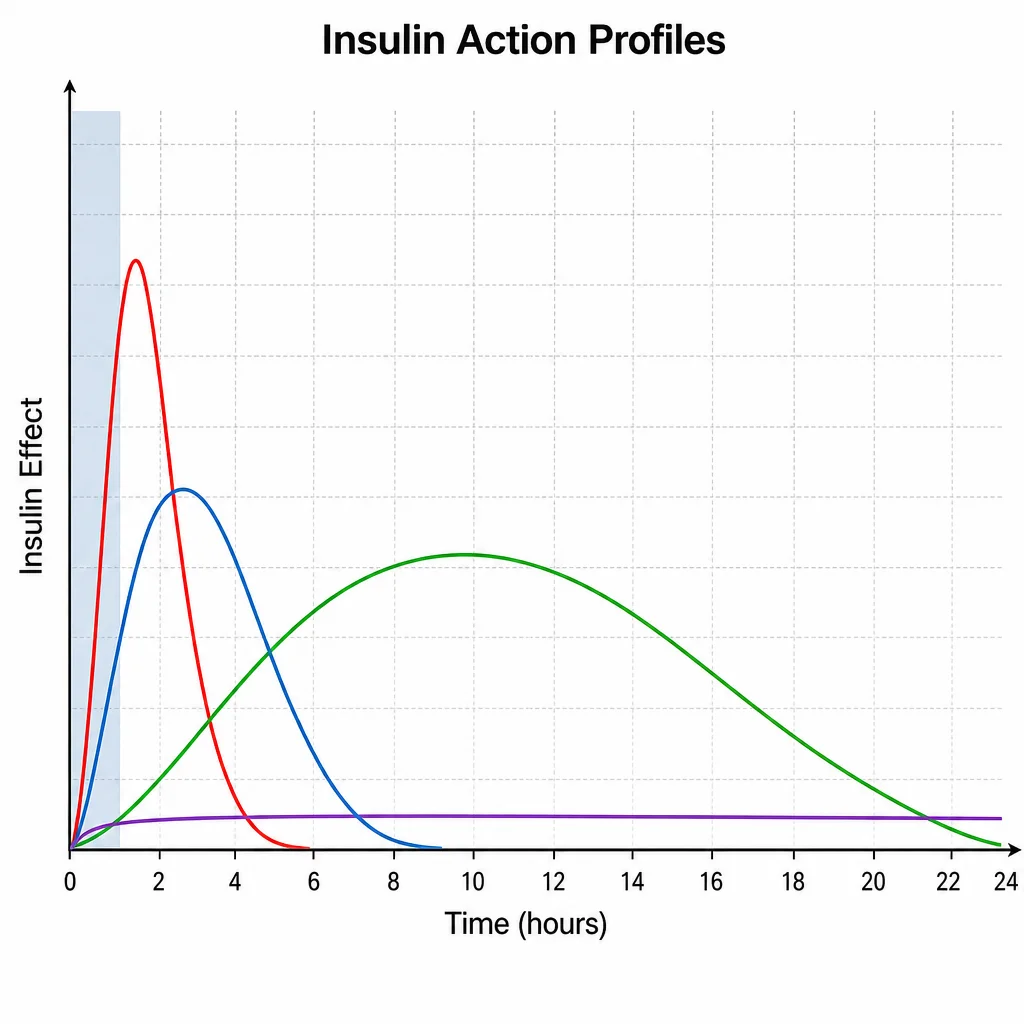
Insulin Types and Timing

Insulin Type Onset Peak Duration
Rapid-acting (Lispro, Aspart) 15 min 1-2 hrs 3-4 hrs
Short-acting (Regular) 30-60 min 2-4 hrs 6-8 hrs
Intermediate (NPH) 2-4 hrs 6-12 hrs 16-20 hrs
Long-acting (Glargine) 2-4 hrs No peak 20-24 hrs

Memory Aid: Insulin Timing

"RUN FAST" - Rapid and Regular insulin work fast, give before meals

"NPH = No Particular Hurry" - Intermediate acting, longer duration

Commonly Confused Points

Confusion Point Correct Information Common Mistake
Hypoglycemia symptoms Shakiness, sweating, hunger, confusion Confusing with hyperglycemia (3 P's)
Insulin storage Unopened: refrigerate; In use: room temp 28 days Thinking all insulin must be refrigerated
Sick day management Continue insulin even if not eating Stopping insulin when NPO

Common Pitfall

Never mix insulin glargine (Lantus) with other insulins - it will precipitate and become ineffective

Study Tips

Memory Aids

  • DKA symptoms: "FRUITY" - Fruity breath, Rapid breathing, Upset stomach, Increased urination, Thirsty, Young patients
  • Hypoglycemia treatment: "Rule of 15" - 15g carbs, wait 15 min, recheck glucose
  • HbA1c goal: "Less than 7 keeps you close to heaven"

Quick Check

  • ☐ Can you differentiate DKA from HHS?
  • ☐ Do you know insulin onset/peak/duration times?
  • ☐ Can you identify chronic diabetes complications?
  • ☐ Do you understand sick day management?

Remember: Diabetes management is about preventing complications through consistent glucose control. You've got this - every question you master brings you closer to becoming an excellent nurse! 🌟

다음 이론을 계속 학습하려면 로그인하세요.

로그인하고 계속 학습
컨텐츠를 그만볼래?

필기노트, 하이라이터, 메모는 잘 쓰고 있어?

내보내줘
어떤 폴더에 저장할래?

컨텐츠 노트에는 총 0개의 폴더가 있어!

폴더 만들기
컨텐츠 만들기
만들기
신고했어요.

운영진이 검토할게요!

해당 유저를 차단했어요.

마이페이지에서 차단한 회원을 관리할 수 있어요.