컨텐츠 내용을 수정할 수 있습니다
Instead of just memorizing deficiency symptoms, we first check swallowing safety, treatment stage, lab trends, medications, and the route of intake—then we connect the right foods and supplements.
Core Goal: We make decisions in this order: Can the patient eat safely? → What is deficient or in excess? → Does it conflict with any medications or lab values? → Is it appropriate for the current disease stage? → How will we re-evaluate the effect?
If you rigidly memorize lists of “good foods” and “bad foods,” you’ll fall into traps. The same banana, milk, or leafy green vegetable means something completely different depending on the potassium level, kidney function, dialysis status, medications, and the amount consumed. For a real patient, the final word always comes from the prescription, the most recent lab results, your facility’s protocol, and the clinical dietitian’s plan.
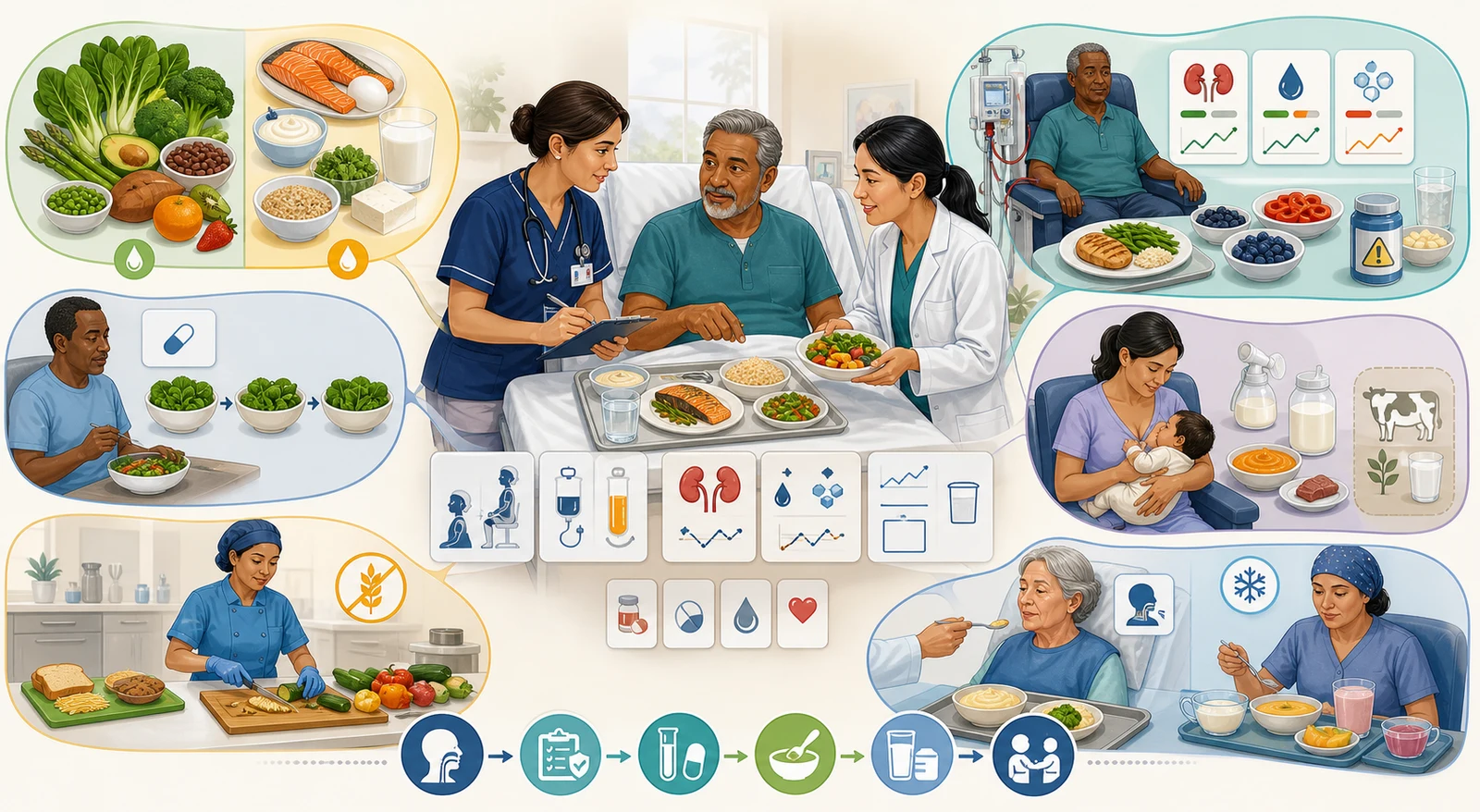
If there’s decreased consciousness, coughing or a wet voice, signs of aspiration, pre-procedure NPO status, or acute instability, protecting the airway and verifying the order come before choosing nutrients.
Distinguish whether the patient is in an acute phase or recovery, has conservative kidney disease or is on dialysis, is immediately post-op, or needs long-term education.
Look at electrolytes, blood glucose, kidney and liver function, CBC, and weight trends, and connect them to interactions with diuretics, anticoagulants, insulin, phosphate binders, and supplements.
Confirm the current route and prescribed texture—whether it’s a regular diet, a modified-swallowing diet, enteral nutrition, or parenteral nutrition—and determine the amount to be given at one time and the fluid intake.
Reassess the plan by looking at the actual intake percentage, nausea or pain, bowel movements, urine output, edema, and daily weight and lab trends taken under the same conditions.
| Classification | Key Feature | Nursing Judgment |
|---|---|---|
| Fat-soluble A·D·E·K | Related to fat absorption; relatively large storage capacity in the body. | Connect deficiency to bile, pancreatic, or intestinal malabsorption disorders, but also watch for the risk of accumulation, toxicity, and bleeding from high-dose supplements. |
| Water-soluble B group·C | Most have limited storage, but “safe even in large amounts” is not always true. | Check for alcohol use, malnutrition, GI surgery, long-term medications, and kidney function alongside the potential for both deficiency and toxicity. |
| Supplements | High doses are easily consumed, much more so than from food, and can interact with prescription drugs. | Include the product name, ingredients, single dose amount, frequency, start date, and prescription drugs in the medication reconciliation process. |
Pitfall: Absolute statements like “water-soluble means no toxicity” or “fat-soluble means avoid them all” are wrong. You have to look at the risk of deficiency and the risk of excess at the same time.
If you see megaloblastic anemia plus numbness/tingling in the hands and feet or balance problems, don't miss evaluating B12.
Don't rely on serum levels alone—check the CBC, clinical symptoms, absorption-related causes, and, when ordered, additional metabolic markers.
Thiamine (B1): In patients with chronic alcohol use, severe malnutrition, or prolonged poor oral intake, connect confusion, abnormal eye movements, and ataxia with the risk of refeeding syndrome. For at-risk patients, don't just push carbohydrates first—verify the thiamine and electrolyte plan according to the orders.
Pyridoxine (B6): You can link certain anti-tuberculosis treatments with deficiency prevention, but don't automatically give it to every patient. Long-term high doses can actually cause sensory neuropathy.
Niacin (B3): Watch for flushing, hepatotoxicity, GI symptoms, and possible changes in blood glucose and uric acid levels. Thinking "it's just a vitamin, so liver tests aren't relevant" is a dangerous assumption.
| Nutrient | Key Connection | Safety Boundary |
|---|---|---|
| Vitamin A | Vision and epithelial function; deficiency linked to fat malabsorption | In pregnancy, the goal isn't to ban all food sources but to avoid excessive intake of high-dose preformed vitamin A/retinol supplements and liver products. |
| Vitamin D | Calcium absorption and bone health | Excessive supplementation can cause hypercalcemia and kidney or heart problems, so monitor levels and follow the prescription. |
| Vitamin E | Antioxidant function; fat malabsorption | High-dose supplements can increase bleeding risk and drug interactions. |
| Vitamin K | Clotting factor activation; deficiency linked to intestinal or biliary problems | For patients on warfarin, the goal isn't to eliminate leafy greens but to keep vitamin K intake consistent rather than changing it suddenly. |
Warfarin does not equal "no green leafy vegetables."
Sudden increases or decreases can destabilize the anticoagulant effect, so keep the usual intake pattern steady and monitor INR trends along with signs of bleeding or clotting.
Look for the underlying cause: bleeding, pregnancy, growth, inadequate intake, malabsorption, or chronic disease. Don't just supplement iron and miss a source of bleeding.
Non-heme iron absorption may be helped by taking it with vitamin C-containing foods. Antacids, calcium, and certain medications require checking the spacing interval specific to the product.
Nausea, constipation, and dark stools can be common. Adjust fluids, fiber, and activity after checking the patient's fluid restrictions and bowel status.
Even though iron can darken stools, don't dismiss signs of bleeding—such as sticky black stools, dizziness, tachycardia, or hypotension—as normal side effects.
Match administration and oral care methods to reduce tooth staining based on the product and the patient's swallowing status. Don't casually recommend a straw for patients with dysphagia.
| Assessment Item | Clinical Judgment to Connect |
|---|---|
| Serum potassium and ECG | First, determine if it's hypokalemia or hyperkalemia, consider the possibility of specimen hemolysis, and look at symptoms and ECG risks. "Kidney disease always means a low-potassium diet" is not correct. |
| Kidney function, urine output, dialysis | The need for restriction or supplementation changes based on excretion capacity and the dialysis modality and schedule. |
| Medications | Loop and thiazide diuretics can increase the risk of hypokalemia, while potassium-sparing diuretics and RAAS inhibitors can increase the risk of hyperkalemia. |
| Salt substitutes | "Low-sodium salt" may contain potassium chloride, so don't automatically recommend it for patients at risk for hyperkalemia. |
| Sodium and fluid status | Connect blood pressure, edema, dyspnea, and the prescribed plan for heart failure, cirrhosis, or kidney disease. A low-sodium diet and a fluid restriction are not the same order. |
Protein: Combine a variety of sources like beans, lentils, tofu, nuts, seeds, and whole grains, adjusting the total intake and mix based on any disease-related restrictions.
B12: For a strict vegan diet, a reliable plan for fortified foods or supplementation is absolutely key.
Iron: Pair non-heme iron sources like beans, fortified cereals, and leafy greens with vitamin C-rich foods to boost absorption.
Calcium & Vitamin D: Check the labels on calcium- and vitamin D-fortified products, and look at the protein, sugar, and sodium content at the same time.
Other things to check: Iodine, zinc, omega-3s, total calorie intake, and the specific needs during pregnancy, lactation, and growth periods.
Even within the same religion or culture, food taboos, fasting practices, separation of cooking utensils, and allowed exceptions can vary from person to person.
Check for risks like dehydration and hypoglycemia when fasting is combined with insulin, diuretics, or anticoagulants, and create a safety plan with the treatment team.
Look into ingredients that matter to the patient, such as capsules, gelatin, or alcohol-containing medications and supplements.
Connect with a clinical dietitian, pharmacist, interpreter, and cultural or spiritual support staff, and document the patient's choices.
Before 12 months of age, the main drink should be breast milk or iron-fortified infant formula.
Giving regular cow's milk or plant-based beverages as a substitute for infant formula can fail to meet the necessary nutritional profile. Starting around 6 months of age, introduce iron-rich complementary foods based on developmental readiness, but follow pediatric care guidelines for the specific timing and any supplementation.
| Situation | Safety Judgment |
|---|---|
| Regular cow's milk or plant-based beverages | Do not use as the main drink or a formula substitute before 12 months. Even after 12 months, consider whether it's unsweetened and fortified, and look at the whole diet. |
| Iron | Crucial for growth and neurodevelopment. Assess the type of breastfeeding or formula feeding, prematurity status, and complementary food intake, and supplement according to the healthcare provider's guidance. |
| Vitamin D | Supplementation needs can change based on the amount of breast milk versus formula intake, so check the pediatric guidelines. |
| Texture & choking | Textures must match the developmental stage, and an upright seated position with direct supervision is necessary. Modify choking hazards like whole nuts, popcorn, and round grapes. |
| Honey | Do not give it before 12 months due to the risk of infant botulism. |
Arbitrarily cutting out gluten before testing can affect the accuracy of the diagnosis, so talk it over with the medical team.
The foundation is a lifelong restriction of gluten, avoiding wheat, barley, rye, and triticale.
Check the labels and manufacturing information for things like sauces, processed meats, seasonings, medications, and supplements.
Prevent contamination from flour dust on shared toasters, cutting boards, fryers, utensils, and bulk food bins.
Don't automatically assume regular oats are okay. Introduce certified gluten-free oats in consultation with a doctor or dietitian and monitor for any reaction.
| Factor | Conservative CKD | During Dialysis |
|---|---|---|
| Protein | You can cut back on excess, but going too low raises the risk of malnutrition. | Losses from dialysis can actually increase requirements, so you look at the dialysis modality and nutritional status. |
| Potassium | Tailor it to the blood level, medications, acid-base status, and how well the kidneys can still excrete it. | Adjust based on the dialysis interval, residual kidney function, and the trend in lab values. |
| Phosphorus | Look at lab results, PTH and bone status, food additives, and whether a phosphate binder is being used. | Dialysis alone may not remove enough, so you coordinate food choices with the timing of binders. |
| Sodium & Fluid | Match it to the blood pressure, edema, cardiac status, and urine output. | Link it to interdialytic weight gain, hypotension, edema, and shortness of breath. |
“Kidney patients must minimize protein, potassium, phosphorus, and fluid all at once” is not the correct answer.
The right answer changes depending on current lab results, the stage of CKD, whether they’re on dialysis, and the risk of inadequate intake. Overly strict restrictions can also cause malnutrition and muscle loss.
Calories & Protein: Make sure the patient gets the amount they need. Don’t automatically restrict protein long-term just because hepatic encephalopathy is present.
Minimize fasting: Eat small, frequent meals and consider a late-evening snack to avoid long periods without food.
Ascites & Edema: Sodium restriction is matched to the prescription and intake status; for fluid restriction, check for a separate indication like hyponatremia.
Infection prevention: Avoid raw or undercooked shellfish, fish, and meat, as well as unpasteurized dairy products.
Alcohol: Stop completely, and for herbal or high-dose supplements, check for potential liver toxicity too.
Check whether NPO has been ordered, and assess pain, nausea, bowel function, and any planned procedures. Don’t restart oral intake on your own.
Once the patient can eat, start with small, frequent, low-fat meals as prescribed and monitor tolerance.
In pancreatitis, avoid alcohol even in mild cases. Smoking cessation is also important for reducing the risk of recurrence.
If steatorrhea, weight loss, or fat-soluble vitamin deficiencies are present, check the timing of pancreatic enzymes with meals and the supplementation plan.
Check whether symptoms worsen after high-fat meals; if there are signs of acute inflammation or bile duct obstruction, assessment and reporting come before diet teaching.
| Condition | Priority teaching | Overgeneralization to avoid |
|---|---|---|
| GERD | Small meals, identify personal trigger foods, don’t lie down right after eating, avoid large late-night meals | Banning the same food list for every patient for life |
| Dumping syndrome | Small, frequent meals, reduce concentrated sugars, include protein, separate meals and fluids as prescribed | Excessively restricting all fluids even when no symptoms are present |
| Post-bariatric surgery | Stepwise texture progression, small amounts eaten slowly, protein first, long-term plan for fluids, vitamins, and minerals | Assuming that because weight is dropping, supplements and follow-up labs are unnecessary |
Situation: A patient on warfarin suddenly wants to stop eating all the leafy greens they’ve been having daily for health reasons.
Judgment: Don’t forbid it — instead, keep their usual intake consistent and connect them to INR monitoring plus education on bleeding and clotting risks.
Situation: A patient with high potassium who’s on an ACE inhibitor and spironolactone is using a low-sodium salt substitute.
Judgment: Check whether it contains potassium chloride, hold off on using it, and verify potassium levels, ECG, and the prescribing team’s guidance.
Situation: A caregiver wants to switch an 8-month-old infant’s formula to a regular plant-based beverage.
Judgment: It’s not a substitute for infant formula, so don’t make the switch. Review plans for breast milk, iron-fortified formula, and age-appropriate complementary foods.
Situation: A patient on a strict vegan diet shows macrocytic red blood cells and tingling in the hands and feet.
Judgment: Rather than just giving folate first, assess for B12 deficiency and its absorption-related causes, and document neurological status.
Situation: Gluten-free bread is being toasted in the same toaster used for regular bread.
Judgment: Even if the food itself is correct, there’s a cross-contact risk — arrange for separate equipment or a safe barrier method.
Situation: A patient with oral mucositis is served hot tomato soup and dry crackers.
Judgment: Acidic, hot, and rough textures will irritate the mucosa, so choose cool or room-temperature, soft, moist, high-calorie, high-protein alternatives instead.
Situation: A patient on hemodialysis is barely eating, believing that “kidney patients must avoid protein.”
Judgment: Assess their protein needs during dialysis and the risk of malnutrition, then connect them to a clinical dietitian for an individualized protein plan.
Situation: A patient with altered consciousness who can’t swallow has a low blood glucose level.
Judgment: Don’t give juice or candy by mouth. Protect the airway and carry out the prescribed parenteral rescue treatment and emergency response.
| Risky Absolute Statement | Safe Clinical Judgment Statement |
|---|---|
| If you take warfarin, you must avoid all vitamin K foods. | Keep intake consistent rather than changing it suddenly, and track INR. |
| In kidney disease, you must restrict potassium, phosphorus, and protein all at once. | Adjust each one according to the stage, lab results, medications, urine output, and whether the patient is on dialysis. |
| Vegans can’t get B12. | Develop a reliable B12 supply plan using fortified foods or supplements. |
| All dairy is forbidden before 1 year of age. | Don’t use regular cow’s milk as the main drink, but follow pediatric guidelines for developmentally appropriate food forms and allergy planning. |
| Black stool from iron is always normal. | Distinguish between the expected dark stool and the systemic and stool characteristics of GI bleeding. |
| Water-soluble vitamins are safe even in large amounts. | Check for neurological, hepatic, renal, and drug interactions with high-dose supplements. |
| Straws are helpful for dysphagia. | Determine tools and positioning based on the prescribed texture and an individualized swallowing assessment. |
| Diet education is complete once you hand over a food list. | Reassess the patient’s actual intake, cost and cultural factors, cooking environment, symptoms, and lab trends. |
This material is an educational summary newly constructed around recurring study topics. It does not reproduce actual exam questions, answer choices, tables, or images, and it is not a substitute for individual patient prescriptions, lab work, institutional protocols, or the judgment of a clinical dietitian.
다음 이론을 계속 학습하려면 로그인하세요.
로그인하고 계속 학습필기노트, 하이라이터, 메모는 잘 쓰고 있어?
내보내줘운영진이 검토할게요!
마이페이지에서 차단한 회원을 관리할 수 있어요.