컨텐츠 내용을 수정할 수 있습니다
Instead of trying to name the disease first, we screen for respiratory muscle weakness and swallowing difficulties. Then, we connect the speed, distribution, and fatigability of the weakness, along with any cognitive or behavioral changes and functional decline, to address the most dangerous problems first.
Core Goal: We make our judgments in this order: Breathing, Cough, Swallowing → Speed and Distribution of Weakness → Sensation, Cognition, Behavior → Medications, Infection, Fever, Functional Changes → Reassessment Under the Same Conditions.
We don't lump together conditions like GBS, MG, and ALS—where breathing and swallowing can become rapidly dangerous—with conditions like Parkinson's, Alzheimer's, Huntington's, and MS—where we need to consider function, cognition, behavior, and environmental safety together—just because they all involve "muscle weakness."
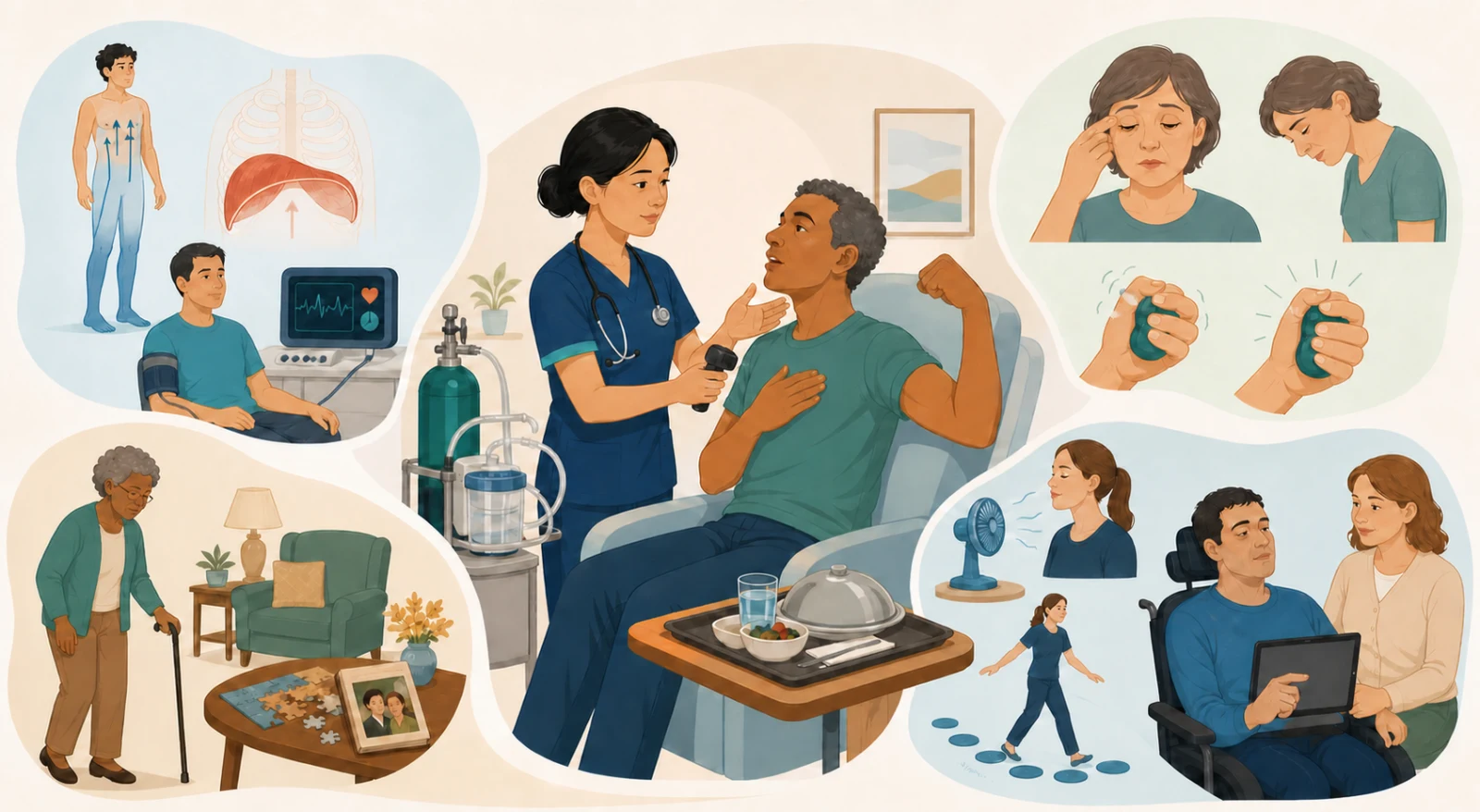
Check the respiratory rate and effort, chest wall movement, whether the patient can speak a full sentence, and the use of accessory muscles.
Check cough strength, secretion clearance, a wet-sounding voice, and drooling, and have suction equipment ready.
If there's choking, a change in voice quality, or difficulty swallowing saliva, hold oral intake and connect to a swallowing evaluation pathway.
Is it acute or progressive? Ascending or fatigable? Compare left-right symmetry and sensory/reflex findings.
Check gait and fall risk, acute changes in cognition or behavior, and communication and caregiving environment.
Reassess breathing, muscle strength, swallowing, and function using the same posture and tools to document the direction of change.
Even if the oxygen saturation looks okay, you cannot rule out respiratory muscle weakness.
A weak cough, decreased voice volume, sentences that get shorter quickly, trouble managing saliva or secretions, weak neck flexion, and increased work of breathing are changes that need to be reported immediately. According to your institution's protocol, repeatedly measure objective respiratory function like FVC and inspiratory/expiratory muscle strength, and look at the downward trend and clinical signs together, not just a single number.
| Disease | Distinguishing Clues | What to Protect First |
|---|---|---|
| Guillain-Barré syndrome | Symmetric weakness progressing over hours to weeks, commonly an ascending pattern, decreased reflexes, sensory changes, and autonomic instability | Breathing, cough, swallowing; ECG and blood pressure fluctuations; fall, clot, skin, and pain safety |
| Myasthenia gravis | Skeletal muscle weakness that gets worse with use and improves with rest; ptosis, diplopia, dysarthria, and swallowing changes | Respiratory and bulbar function; aspiration prevention; medication timing and triggers for exacerbation like infection, surgery, or medication changes |
| ALS | Gradual upper and lower motor neuron signs, starting in the limbs or bulbar region; sensation is often relatively preserved | Breathing, nutrition, swallowing; early communication aids; goal-focused multidisciplinary care |
| Multiple sclerosis | Varied CNS symptoms involving vision, sensation, strength, balance, and bladder; fatigue and exacerbations related to heat and infection | Distinguishing new neurological changes from infection; cooling and energy conservation; fall, bladder, and skin safety |
| Parkinson disease | Bradykinesia is central, combined with resting tremor, rigidity, and postural instability; non-motor symptoms may also be present | Strict medication timing; orthostatic hypotension and falls; swallowing, constipation, and nutrition |
| Alzheimer disease | Gradual decline in memory, judgment, and daily function; communication and behavioral changes | Ruling out medical causes for any sudden change; a familiar environment, simple instructions, and safety regarding wandering and swallowing |
| Huntington disease | Autosomal dominant inheritance; a combination of chorea and cognitive, judgment, and psychiatric/behavioral changes | Safety from self-injury, impulsivity, falls, and nutritional issues; genetic counseling and family/communication support |
Repeatedly compare changes in walking, stairs, neck flexion, cough, and ability to speak a full sentence. If a weak cough or swallowing difficulty appears, reassess the need for ICU-level monitoring.
Autonomic involvement in GBS can show up as tachycardia, bradycardia, blood pressure swings, and bowel/bladder issues, so continuous or frequent monitoring is essential.
Both are standard treatments for reducing immune-mediated nerve damage in acute GBS. Monitor for adverse effects, hemodynamic status, and IV access according to the prescription and your facility's protocol.
Prevent pressure injuries, venous thromboembolism, contractures, and pain. Gradually restore function with the rehab team while avoiding over-fatigue.
Don't memorize that corticosteroids are the standard acute treatment for GBS.
The NINDS explains that clinical trials showed corticosteroids were not effective in reducing GBS severity. The core of acute management is indicated IVIG or plasma exchange, along with meticulous respiratory, autonomic, and complication care.
See if ptosis, diplopia, nasal voice, chewing, neck holding, or arm elevation worsen with repeated use and improve after rest.
If the voice becomes weak, the patient can't swallow saliva, the cough weakens, or breathing becomes difficult, recognize this as life-threatening bulbar and ventilatory compromise.
Check for infection, surgery, stress, and new medications, dose changes, or missed doses. Immediately share the complete medication list.
Align anticholinesterase medications with prescribed timing and meal/activity plans. Report symptoms and drug response instead of allowing arbitrary discontinuation or delays.
Don't give food or oral medications first to an MG patient who has drooling, a wet voice, and a weak cough.
Hold oral intake and prepare suction, airway equipment, and emergency pathways. Current judgment is based on clinical bulbar and respiratory signs and serial respiratory function, not relying solely on an old Tensilon response to distinguish myasthenic crisis from so-called cholinergic crisis.
| Domain | ALS | Huntington disease |
|---|---|---|
| Movement | Progressive weakness, atrophy, spasticity, and declining bulbar function | Chorea, balance/gait problems, and later rigidity and functional decline |
| Breathing & nutrition | Track cough, ventilation, swallowing, and weight together; discuss non-invasive ventilation and feeding routes early | Manage weight, aspiration, and mealtime safety related to involuntary movements and swallowing changes |
| Cognition & behavior | Don't assume cognition is always normal; screen for changes in language, executive function, and behavior | Check judgment, attention, problem-solving, along with depression, impulsivity, and psychiatric/behavioral changes |
| Communication & decisions | Connect to AAC, voice banking, and decision-making preferences before speech becomes too weak | Offer simple choices and family support; ensure genetic counseling, autonomy, and safety together |
Planning for a progressive disease is not giving up. Discussing communication aids, nutrition and breathing support, fall prevention, symptom relief, and advance care planning early gives the patient more time to make their own choices. In Huntington disease, depression, suicidal thoughts, or changes in impulse control are signs that require an immediate safety evaluation.
The examples below are newly created scenarios for practicing your judgment flow and do not reproduce actual NCLEX questions, answer choices, or correct answers.
First: Considering the possibility of GBS, check breathing, cough, swallowing, neck flexion, reflexes and gait, and heart rate and blood pressure fluctuations.
Reason: Because respiratory muscle and autonomic function can deteriorate before diagnostic tests are completed.
First: Hold oral intake, prepare for airway management and aspiration, and check respiratory effort, cough, swallowing, and objective respiratory function to activate the crisis pathway.
Avoid: Dismissing it as simple fatigue and letting the patient rest alone, or giving food and oral medications first.
First: Prevent a fall and check postural symptoms and blood pressure, hydration status, and the actual administration time against the prescription.
Connection: Both medication delay and orthostatic hypotension can compromise mobility safety, so correct each one and reassess.
First: Do not dismiss this as the natural course of dementia; evaluate for infection, pain, hypoxia, dehydration, elimination issues, medications, and environmental changes.
Communication: Use short, calm guidance, a familiar caregiver and environment, and safe redirection.
First: Provide a cool environment, rest, and hydration; check body temperature, signs of infection, and for any new neurological deficits, then reassess using the same items.
Judgment: Do not conclude based on a single symptom whether it is a temporary heat-related worsening or new disease activity.
First: Evaluate respiratory function trends, swallowing, aspiration, intake, and weight, and connect with the respiratory, nutrition, and speech-language pathology teams.
In advance: Confirm the patient's preferred AAC and goals of care before speaking becomes more difficult.
Wrong answer patterns that blur priorities more than the disease name itself
Respiratory effort, voice, sentence length, cough strength and secretions
Hold oral intake if there is choking, drooling, or a wet voice
Acute ascending, fatigable, central, or gradual pattern
Falls, sudden confusion, self-harm or impulsivity, communication
Infection, fever, surgery, medication change or omission, and postural changes
Confirm worsening and intervention response by trending under the same conditions
Scope of evidence: Independently written in August 2026 based on the judgment scope of Physiological Adaptation, Reduction of Risk Potential, and Basic Care and Comfort in the 2026 NCSBN RN Test Plan; NINDS materials on GBS, MG, MS, ALS, and Huntington; the EAN/PNS GBS guideline; the AAN/MGFA MG consensus guidance; NIA Alzheimer's caregiving materials; and the Parkinson's Foundation information on swallowing, orthostatic hypotension, and medications.
NCSBN 2026 RN Test Plan · NINDS GBS · 2023 EAN/PNS GBS Guideline · NINDS MG · AAN MG Guidance
NINDS MS · NINDS ALS · NINDS Huntington · NIA Alzheimer Medical Problems · Parkinson's Foundation Swallowing
Content Boundaries: In the local feedback materials, only recurring study topics were identified. Actual exam questions, answer choices, correct answers, screens, tables, patient information, and source images were not copied or restored. All explanations, tables, case examples, judgment sequences, and illustrations were newly written and created.
This material is a summary for nursing exam study purposes and does not replace actual patient diagnosis, medication administration, or treatment orders. In clinical practice, please follow the latest prescriptions, institutional protocols, and the judgment of the responsible professional team.
다음 이론을 계속 학습하려면 로그인하세요.
로그인하고 계속 학습필기노트, 하이라이터, 메모는 잘 쓰고 있어?
내보내줘운영진이 검토할게요!
마이페이지에서 차단한 회원을 관리할 수 있어요.